
Lumbar traction is considered when the back behaves like a nerve-root-compression problem rather than ordinary muscle soreness, with leg pain, tingling, or sitting intolerance pointing toward a radicular picture.
Supine traction fits that context as a table-based adjunct that may temporarily unload the nerve root while the rest of rehabilitation continues.
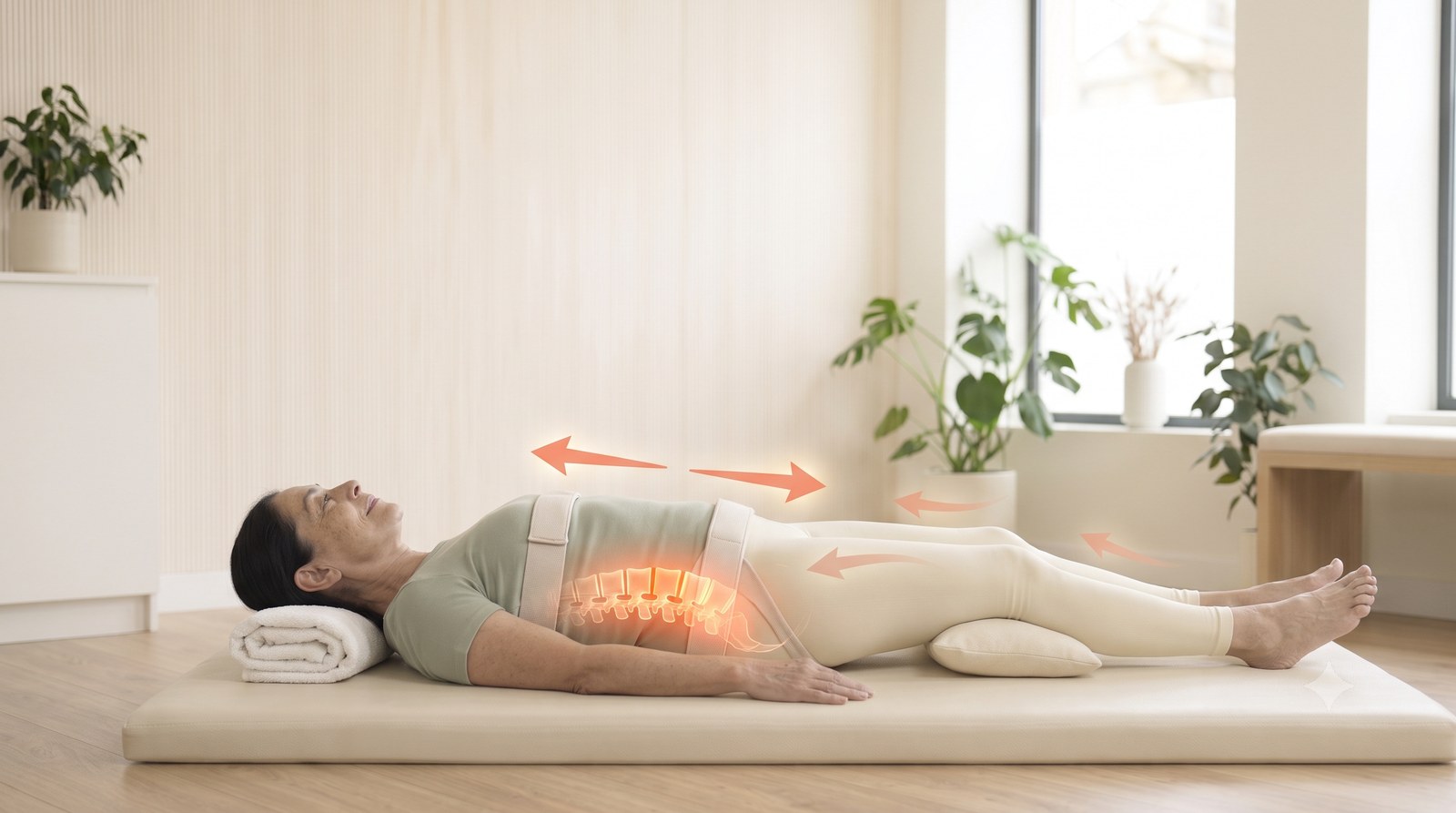
What this involves
- Supine traction added to physiotherapy showed significant medium effects on pain and disability, but on low quality evidence
- Prone traction showed small effects that were not statistically significant, and awkwardly, that finding rested on high quality evidence
- So if traction is used at all, supine is the position the evidence points to
How much
It is a clinic treatment done in short sessions, usually alongside active physiotherapy, with the supine position the evidence-supported option.
Demo video
Further reading
Safety note
Not to be used with cauda equina signs, progressive neurological deficit, spinal infection, tumour, fracture, or during pregnancy
This is educational information to help people understand their options; it is not a substitute for a proper healthcare assessment. An accurate diagnosis is required for effective treatment. If pain or symptoms are ongoing, the worst thing you can do is nothing — seek professional counsel and assessment rather than self-treating indefinitely from a blog post.
This content is educational and does not replace individual clinical assessment.