
Editorial status: clinical_review
The modified curl-up is a small upper-trunk lift used to practise abdominal effort while keeping the lower back in a comfortable position. It may suit some strength or rehabilitation programmes, but it is not a treatment for a particular spinal diagnosis and the named McGill-style dose has not been shown to be uniquely effective.
What this exercise is for
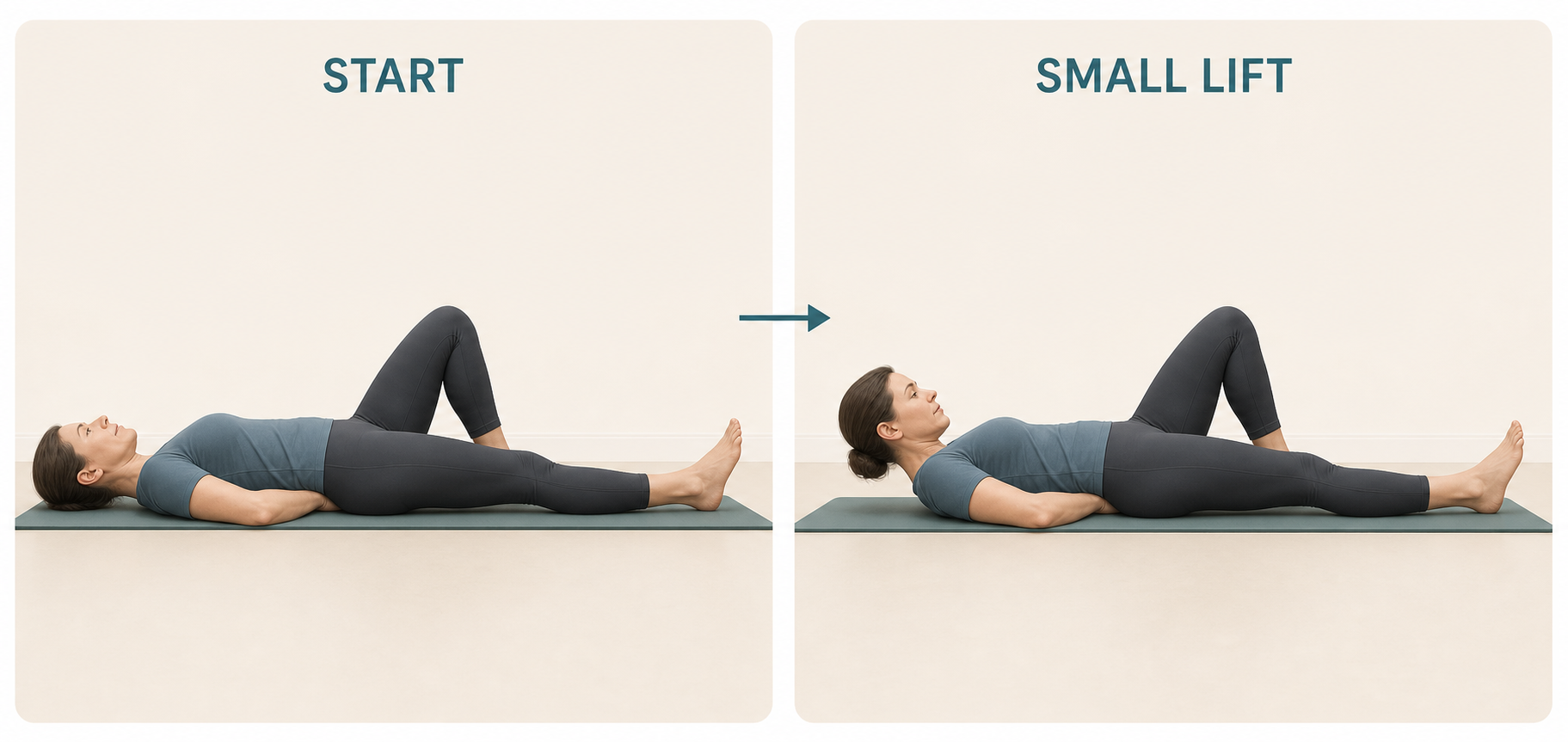
One knee is bent, the other leg rests straight and the hands provide feedback beneath the natural lower-back curve. The head and upper shoulders lift only a small distance, so this is not a full sit-up or repeated spinal curl.
The exercise is sometimes grouped with the side plank and bird-dog as the ‘McGill Big Three’. A small trial found broadly similar improvement from that three-exercise programme and conventional physiotherapy; it did not establish that this curl-up works independently or is better than other suitable exercise.
Quick facts
- Main Goal
- Low-load abdominal control and endurance
- Position
- Lying on your back with one knee bent
- Equipment
- Exercise mat; optional thin head support
- Starting Level
- Scalable, but not appropriate for everyone
- Time
- About 3 to 5 minutes
When it may be considered
- When a small, controlled upper-trunk lift fits your strength, endurance or movement goals.
- When you can lie comfortably in the starting position and keep breathing without straining the neck.
- As one option within a broader exercise plan chosen around your needs, preferences and capabilities.
Get assessed before trying it if
- Back pain followed significant trauma, is severe or rapidly worsening, or is accompanied by fever, feeling unwell, unexplained weight loss or a history of cancer.
- You have osteoporosis, a previous spinal fracture or concern about loaded spinal bending; the exercise may need modification or replacement.
- You have recent abdominal or spinal surgery, unexplained abdominal pain, hernia symptoms, pregnancy-related abdominal concerns, or neck pain that the setup aggravates.
- You are unsure why symptoms are occurring or whether this exercise fits your condition and current stage.
How to do it
- Lie on your back. Bend one knee with the foot flat and let the other leg rest straight. Change the leg position if it is uncomfortable.
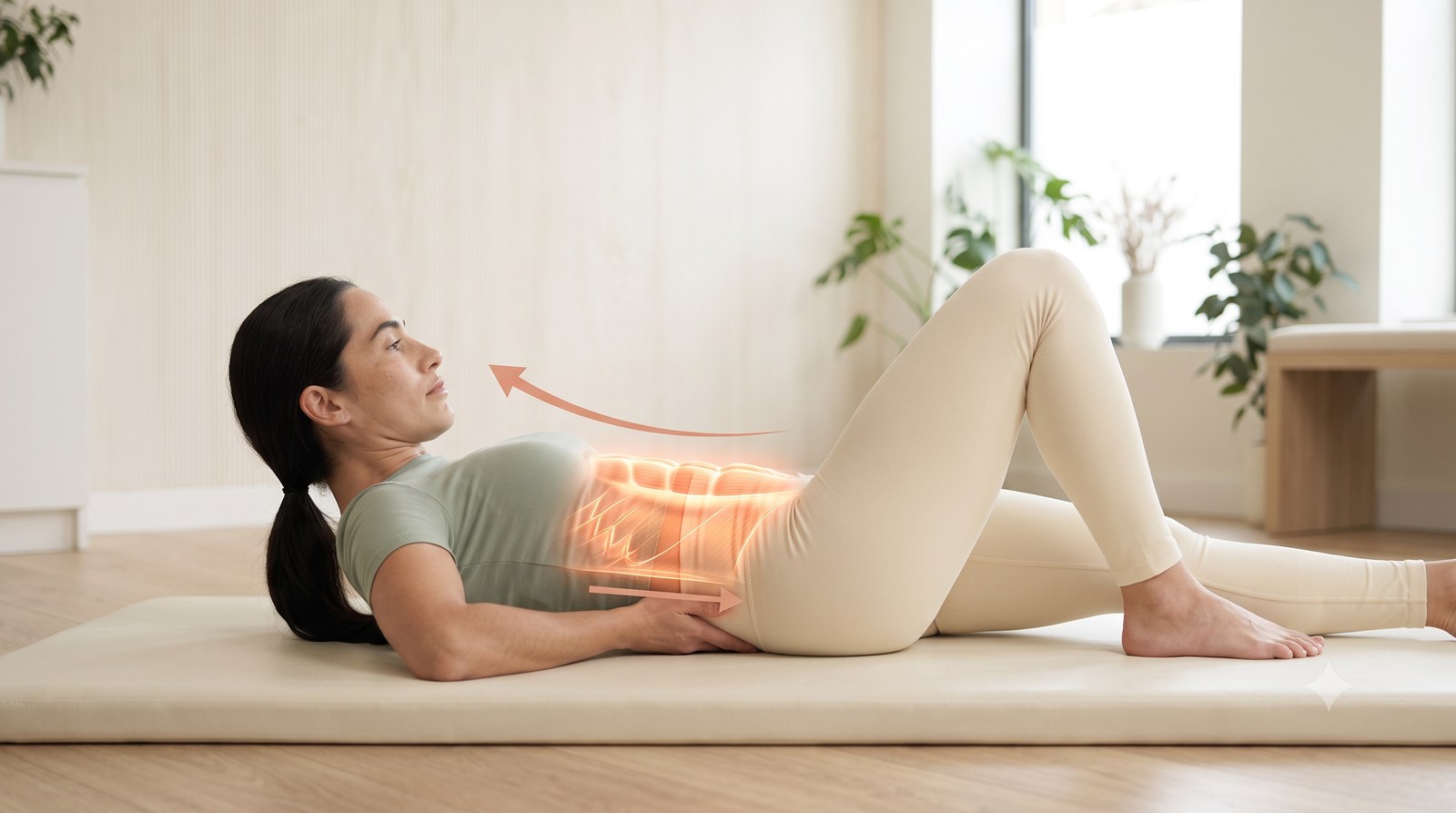
- Place both hands beneath the natural curve of your lower back as position feedback. Do not force the back down into the hands or exaggerate the arch.
- Let the neck feel long and keep the chin comfortable rather than pressing it firmly to the chest.
- Gently tense the abdominal area and lift the head and top of the shoulders a small distance as one unit. Stop well before it becomes a full sit-up.
- Keep breathing during the brief hold, then lower slowly and relax before the next repetition.
Dosage
- Starting Point: 1 set of 3 to 5 controlled repetitions
- Hold: About 3 to 5 seconds while breathing normally
- Frequency: Try on 2 or 3 non-consecutive days in the first week
- Progression Rule: Change only repetitions or hold time, not both, while the movement remains comfortable
- Evidence Note: This is a cautious editorial starting point, not a proven optimal dose; 8 to 10-second 6/4/2 pyramids are named protocols rather than established requirements
How to judge your response
Expected response
- Moderate effort through the abdominal muscles and possibly mild muscle soreness after an unfamiliar session.
- The neck and lower back should remain comfortable enough to breathe and move smoothly.
Reduce or simplify
- Make the lift smaller or keep the head supported if the neck works harder than the abdomen.
- Use fewer repetitions or a shorter hold if technique deteriorates or symptoms increase across the set.
Stop and seek advice
- Stop for sharp, spreading or increasing pain, headache, dizziness, new tingling, numbness or weakness.
- Seek clinical advice if symptoms remain clearly worse after the session or the exercise repeatedly aggravates them.
Seek urgent assessment
- Call 999 or go to A&E for new loss of feeling around the genitals or anus, bladder or bowel changes, or pain, tingling, weakness or numbness in both legs.
Common mistakes
- Lifting into a full sit-up rather than using a small upper-trunk movement.
- Pulling the chin hard towards the chest or leading only with the head.
- Flattening the lower back forcefully into the hands.
- Holding the breath or using a maximal brace.
- Treating a fixed daily pyramid as necessary for progress.
Make it easier
- Keep the head down and practise a gentle abdominal tension while breathing.
- Use a smaller lift or a thin folded towel beneath the head.
- Choose another abdominal exercise if lying or spinal flexion is not suitable for you.
Progress it
- Add one repetition while preserving a small lift and normal breathing.
- Increase the hold slightly before considering extra resistance.
- Progress within a wider programme rather than making the curl-up increasingly forceful.
Evidence and limitations
Exercise probably reduces pain compared with no treatment, usual care or placebo for chronic low back pain, although average functional effects are small. NICE recommends choosing exercise around the person's needs, preferences and capabilities.
Motor-control exercise has not proved superior to other forms of exercise. Evidence for the ‘McGill Big Three’ is limited: a trial of 34 people compared the three-exercise programme with conventional physiotherapy and found broadly similar improvement.
The evidence does not establish this individual curl-up or a specific 8-to-10-second 6/4/2 dose as optimal. A study of restricting early-morning bending does not justify a universal rule to avoid this exercise for one hour after waking.
Common questions
Should I flatten my back?
No. Let the hands provide feedback beneath a comfortable natural curve; do not force the back flat or exaggerate the arch.
Must I use a 6/4/2 pyramid?
No. It is a named protocol, not a proven best dose. A smaller response-based starting dose may be more appropriate.
Should I avoid it after waking?
There is no universal one-hour rule for this exercise. Change the timing if it is consistently less comfortable immediately after waking.
References
- Low back pain and sciatica in over 16s: assessment and management — guideline; accessed 2026-07-12
- Exercise therapy for chronic low back pain — systematic review; accessed 2026-07-12
- Motor control exercise for chronic non-specific low-back pain — systematic review; accessed 2026-07-12
- Effects of McGill stabilization exercises and conventional physiotherapy on pain, functional disability and active back range of motion in patients with chronic non-specific low back pain — trial; accessed 2026-07-12
- How to exercise safely for bones — health system; accessed 2026-07-12
- Back pain — health system; accessed 2026-07-12
- The reduction of chronic, nonspecific low back pain through the control of early morning lumbar flexion: 3-year follow-up — trial; accessed 2026-07-12
Clinical review date: pending
Educational information only. It cannot determine whether an exercise is appropriate for your individual symptoms or replace an assessment by a qualified healthcare professional.