
Extension control becomes important when the low back keeps drifting into an overarched posture during standing, walking, or lifting.
Posterior pelvic tilt training fits that pattern because it teaches the pelvis to move independently instead of forcing the lumbar spine to take every bit of extension.
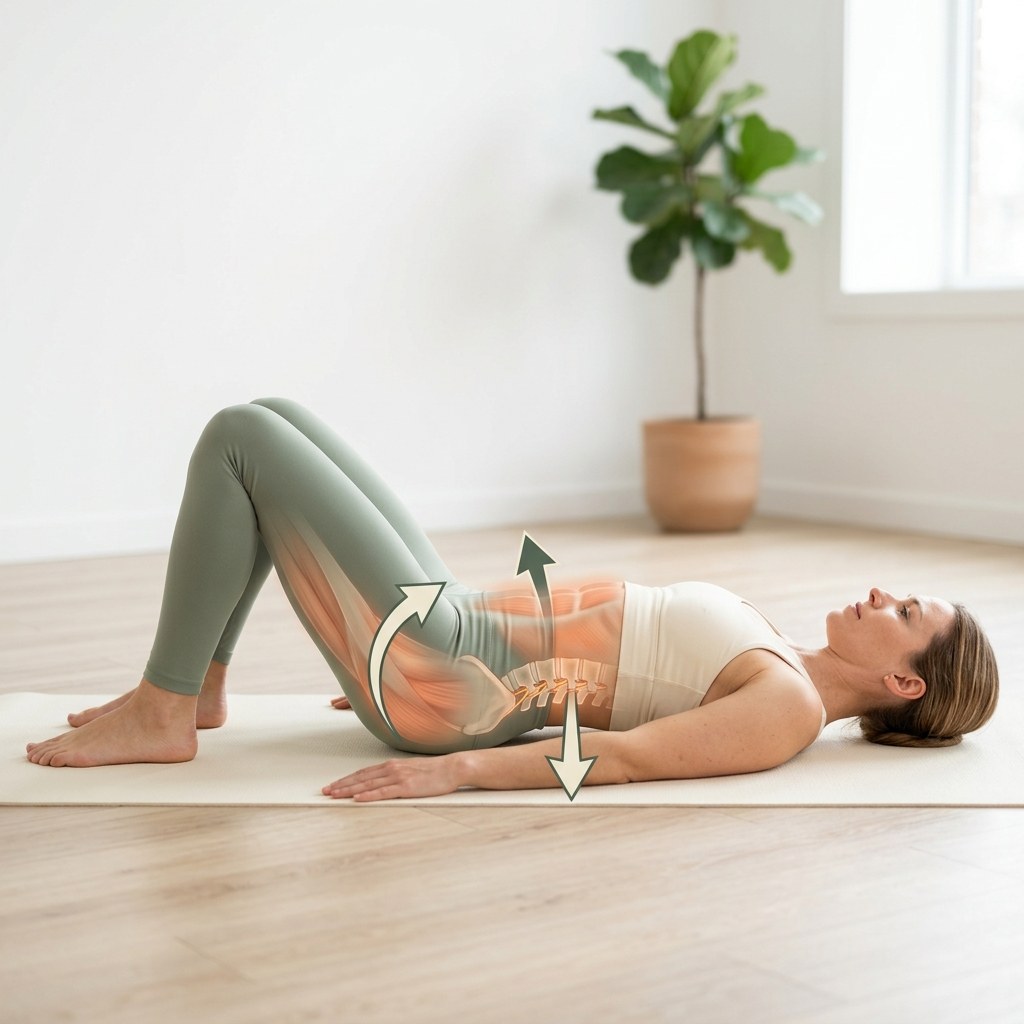
What this involves
- Moving the pelvis on its own, driven by the glutes
- Separating pelvis movement from mid back movement
- Stand upright, relaxed, feet about hip width apart
How much
Use brief practice to find the pelvic tilt without letting the low back take over.
Demo video
Further reading
- https://creativecommons.org/licenses/by/2.0/
- https://doi.org/10.1016/j.math.2015.02.005
- https://doi.org/10.1186/1471-2474-8-90
- https://doi.org/10.1186/1471-2474-9-170
- https://doi.org/10.1186/1758-2555-2-11
Safety note
Stop and contact us straight away if you get new weakness in the leg, numbness around the saddle or genitals, or any loss of bladder or bowel control. Those are red flags and they need same-day medical assessment, not exercise
This is educational information to help people understand their options; it is not a substitute for a proper healthcare assessment. An accurate diagnosis is required for effective treatment. If pain or symptoms are ongoing, the worst thing you can do is nothing — seek professional counsel and assessment rather than self-treating indefinitely from a blog post.
This content is educational and does not replace individual clinical assessment.